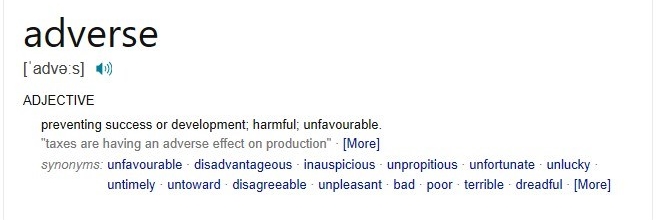
I read the article entitled “New research provides insights about children at risk” and waited to hear how we as teachers could better assist these at-risk children. However, afterwards I felt nothing but a wave of annoyance and could only say, ‘well duh!’. The article pointed towards the fact that children can suffer through adverse childhood experiences. Well, yes … I think we all suffer through adverse experiences, thus the meaning behind the word ‘adverse’.
The Adverse Childhood Experiences (ACE’s) listed include experiences of parental separation or divorce, depression in a parent and incarceration of a parent. Even though none of these experiences are in any way the child’s fault, they child must learn to deal with them and move on. International studies consistently found a group of up to 10 specific childhood experiences associated with poor outcomes later in life. The AUT researchers found that a child’s performance in cognitive tests at four-and-a-half years of age declined in direct correlation with the number of ACEs they had experienced.
Researchers further found that “The quality of the mother-partner relationship and parental health and wellness were identified as protective factors that may allow some children to experience no ACEs, despite being at heightened risk of experiencing multiple ACEs. The quality of the mother-partner relationship included having co-parenting support, the strength of the partnership and warmth in the relationship”.
Surely, we already knew this? I am quite surprised that this (non)article was released by the Ministry of Social Development.
Although we can do little, as teachers, to help in mother-partner relationships or parental health etc, we can do something to assist the children affected by adverse childhood experiences.
Teachers spend vast amounts of time with students and it is our duty of care to ensure that each child receives positive childhood experiences, particularly regarding learning, education and school in general. Some children experience negativity throughout their young lives but by providing a positive, encouraging and nurturing classroom environment we can go some way to providing a role model of character and equity; and development of a love of life long learning in the hope of alleviating some of the lingering effects of these adverse childhood experiences and development of confident and happy members of our community, breaking the cycle of adversity.
Reference:
New research provides insights about children at risk : http://www.scoop.co.nz/stories/PO1904/S00118/new-research-provides-insights-about-children-at-risk.htm e

 MyProvocations