Future Focused Education – Climate change

“The shift to a cleaner energy economy won’t happen overnight, and it will require tough choices along the way.  But the debate is settled.  Climate change is a fact.  And when our children’s children look us in the eye and ask if we did all we could to leave them a safer, more stable world, with new sources of energy, I want us to be able to say yes, we did!” (Obama, 2014).

Following a recent lecture of Future Focused Education, I began to think about the important issues relating to humankind and how education could hold the key to providing sustainable solutions for ‘wicked problems’ in society today, include Climate Change and its global effects.

Climate change is an environmental worldwide problem requiring real life solutions, together with developing education to inform, understand and change ideas, thus providing a safer, sustainable future for everyone.  In 1896 Swedish physicist Svante Arrhenius, first described problems relating to the greenhouse effect.  The focus of his findings is still debated today (Cossia, 2011).  Understanding the challenges and consequences of climate change, including rising global temperatures and extreme events such as flooding and severe weather is a prerequisite for facing the challenge of providing a solution to these issues; and many more. Future focused education must be comprehensive and multidisciplinary, especially in relation ‘Climate Change Education’, and a focus of young people throughout schools.

The challenges of the twenty first century will increasingly require students to consider and interpret the pathways that humanity has taken to date.  Students will be confronted with the effects of climate change throughout their lives and, as the decision makers of the future, will be instrumental in shaping society and future developments throughout the world.  Education is stated to be an integral aspect of the transformation to a sustainable society.  (Bussey, 2002).

Educators should be proactive in their teaching to providing solutions to climate change.  Bussey (2002) states that the current education system is “caught up in archaic modes of organisation and learning”.  Students learn the world through their hearts, with their heads following later.  It is with this in mind that a strategic and real-time solution must be established into every students learning, encompassing skilful and authentic information and a desire to research, inquire and transform.

We, as teachers, must educate students to ‘care’ about the environment, climate change and how education is the key to success to alleviating this and other ‘wicked’ problems around the world.  Future focused education combined with cross-curricular collaborative learning would ensure that it is not just a science or geography related topic but could include many other subjects, working together, ensuring student agency and development of thinking skills to source solutions to real life problems.

How easy will this be to implement? We will find out soon enough, when we, like so many before us enter this profession as Educators.

References:

Cossia, J. M. (2011).  Global warming in the 21st century.  New York, USA : Nova Science Publishers, Inc.

Bussey, M. (2002).  From youth futures to futures for all: Reclaiming the human story.  In J. Gidley & S. Inayatullah (Eds.), Youth Futures : Comparative Research and Transformative Visions.  Connecticut, USA : Greenwood Publishing Group

Obama, B. (2014).  President Barack Obama’s State of the Union Address [Website].  Retrieved on June 1, 2019 from The White House website: http://obamawhitehouse.archives.gov/the-press/2014/01/28/president-barack-obamas-state-union-address lsdprio
New research provides insights about children at risk …. or facts we already knew!

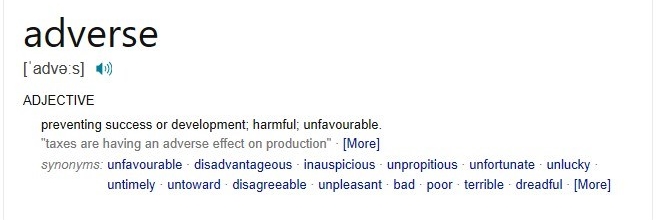
I read the article entitled “New research provides insights about children at risk” and waited to hear how we as teachers could better assist these at-risk children.  However, afterwards I felt nothing but a wave of annoyance and could only say, ‘well duh!’.  The article pointed towards the fact that children can suffer through adverse childhood experiences.  Well, yes … I think we all suffer through adverse experiences, thus the meaning behind the word ‘adverse’.

The Adverse Childhood Experiences (ACE’s) listed include experiences of parental separation or divorce, depression in a parent and incarceration of a parent.  Even though none of these experiences are in any way the child’s fault, they child must learn to deal with them and move on.  International studies consistently found a group of up to 10 specific childhood experiences associated with poor outcomes later in life. The AUT researchers found that a child’s performance in cognitive tests at four-and-a-half years of age declined in direct correlation with the number of ACEs they had experienced.

Researchers further found that “The quality of the mother-partner relationship and parental health and wellness were identified as protective factors that may allow some children to experience no ACEs, despite being at heightened risk of experiencing multiple ACEs.  The quality of the mother-partner relationship included having co-parenting support, the strength of the partnership and warmth in the relationship”.

Surely, we already knew this?  I am quite surprised that this (non)article was released by the Ministry of Social Development.

Although we can do little, as teachers, to help in mother-partner relationships or parental health etc, we can do something to assist the children affected by adverse childhood experiences.

Teachers spend vast amounts of time with students and it is our duty of care to ensure that each child receives positive childhood experiences, particularly regarding learning, education and school in general.  Some children experience negativity throughout their young lives but by providing a positive, encouraging and nurturing classroom environment we can go some way to providing a role model of character and equity; and development of a love of life long learning in the hope of alleviating some of the lingering effects of these adverse childhood experiences and development of confident and happy members of our community, breaking the cycle of adversity.

Reference:

New research provides insights about children at risk : http://www.scoop.co.nz/stories/PO1904/S00118/new-research-provides-insights-about-children-at-risk.htm e

Modern Learning Environments …. Educational Anarchy?

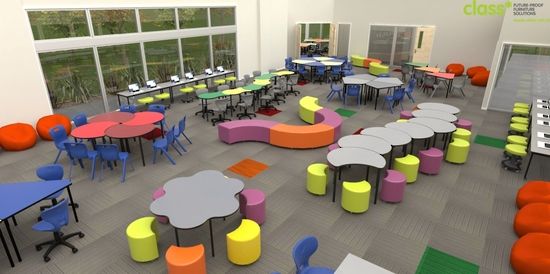
A recent lecture discussed education within the ‘Modern Learning Environment’, sometimes known as flexible learning environments.  These types of schools may be new to Aotearoa New Zealand, but they have existed in the United Kingdom since 1921, when Summerhill School was first established.  Summerhill was set up under the belief that the school should fit the child and not the other way around.  Enid Blyton’s The Naughtiest Girl series of novels, written in the 1940s and 50s, were set in a school based on Summerhill, with democratic meetings allowing the children to make decisions about the school and ‘punishments’.  In the 1970’s working class freedom schools were established in London and Liverpool and enabled pupils to choose their subjects for the day, teachers were ‘workers’ and called by their first name, there were no bells and no timetables.  These examples are all reminiscent of todays ‘modern learning environments’.

In analysing modern learning environments, positively they create a relaxed learning environment and students are treated like young adults instead of ‘school children’.  The schools can be successful for self-motivated students and utilise versatile environments, breaking down cross curricular barriers.  However, modern learning environments do not work for everyone.  Creating open learning classes where two different subject areas are sharing the same space can become a distraction for students.  Without proper management, some students will get left behind in their education and suffer, both emotionally and educationally, through a lack of routine and/or boundaries.

As part of my undergraduate degree I spent 4 weeks at a modern learning primary school in Auckland.  The purpose was to investigate how the school included of Treaty of Waitangi Principles in Education, so much of my time was spent observing classes from Years 2-6.  During this time, I noticed that many children did not complete the work they had chosen, instead they played in the book corner, played games on devices, talked and some were very disruptive.  In the combined Year 3 classroom there were approximately 65 students, 2 teachers and a teacher aide.  When the teachers facilitated small ‘work groups’ of approximately 6-8 students, the remainder of the class chose their own work to complete.  I recall sitting at a maths table and watched as some students wrote sums on the white board, no one checked they had answered correctly, the students just erased their answers and went to the next topic.  I spoke to a few of the students and tried to correct their maths (Year 3 is probably about my level of maths!), however they said that is how they always worked and off they went to play in the corner!  Educational anarchy in action.

For me, the experience left a negative view of modern learning environments.  I understand how it may work for some self-motivated and disciplined students and perhaps work more effectively within a secondary school environment, but I did not see many benefits at a primary level.

Modern learning it may be called, however, the practice is far from modern nor without problems.

References:

https://www.bbc.com/news/magazine-29518319

http://www.summerhillschool.co.uk/

Another brick in the wall – Factory model education

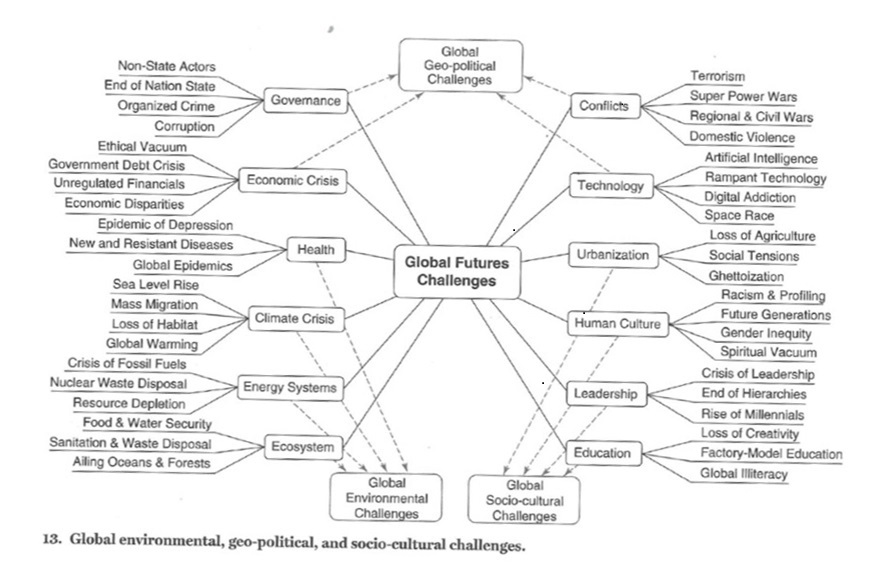
A recent lecture on future focused education led me to think about the need for education to change and be more inclusive of future focused ideas.  I came across a diagram showing Global Future Challenges, as stated by Gibley (2017), and noted her inclusion of Education : Factory-Model Education and Global Illiteracy.  It is considering Factory-Model Education that the song by Pink Floyd came to mind, ‘Another brick in the wall!’.

Pink Floyd – Another brick in the wall: https://binged.it/2WBQOUJ

Pink Floyd used their fame and status to talk about rigid schooling and factory model education in 1979.  It is quite amazing to me that we are still talking about this today, 40 years later.  School has been devised around the same established practice; groups of about 30 students, approximately the same age, taught by one teacher in a single classroom.  The factory-model classroom was established to adequately prepare youth for the industrialized economy.

Since the first schools were established, things have slightly changed, and schools moved to adopt new technologies and progress into the modern era, with the introduction of computers and software.  However, there is little research-based evidence that these tools have had the impact on public education that many anticipated.  Given the enormous impact that technology has had on nearly every other aspect of our society, how can that be?  The introduction of technology into our classrooms has tried to change the way in which we work but the school structure is practically unchanged since the mid-nineteenth century.  Can we try to change one aspect of education but not any other?

The factory model of schooling came from a belief that education was a way create a tolerant, civilized society, one in which rules were followed.  The factory assembly line was the most efficient way to scale production with each worker knowing what they should do and when to do it.  The factory-model classroom was therefore established to rapidly scale up a system of schools.  Historically, factories weren’t designed to support personalisation and neither were schools.

Today our vision for education is broader, we are more complex and diverse, and our technical capabilities are more powerful.   However, we continue to assume the factory-model classroom and its rigid bell schedules, credit requirements, age-based grade levels, and physical specifications when we talk about school reform.  Will we still be talking about reform in another 40 years?

One school to tackle education reform head on is Ao Tawhiti school in Christchurch.  With no playground, no gym, no bells and students decide their own start times …. is it the answer to an age-old problem?  Personally, it would not suit me as a teacher nor would I send my children there, and the low NCEA results are worrying but I can see how it would work for some students and whanau.

Read more about the school here: https://www.stuff.co.nz/national/education/112584590/unique-school-opens-in-christchurchs-central-city-with-550-pupils?cid=facebook.post&fbclid=IwAR2AjDVMIg-i_afBAkW_rkjL4Q_091seUq_0wrbGf1h0aIhAl1LomCbF-pw

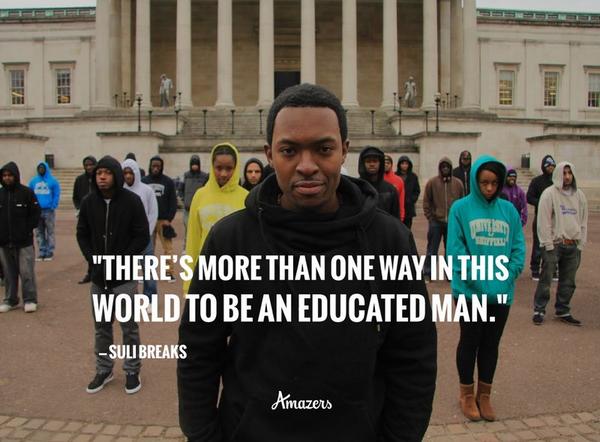
The following video from Suli Breaks, a UK social media influencer and poet, discusses his dislike of school but love of education.  6 minutes to provoke your own views.

Suli Breaks : https://binged.it/2WDECme

We as teachers must participate in the discourse of future focused education.  Wider research into futures education needs to be conducted and we must be a part of this, ensuring that both teachers and students are better prepared for the future.

See the source image

References:

Gidley, J. (2017). The future : a very short introduction. Oxford University Press. Retrieved from http://search.ebscohost.com.ezproxy.aut.ac.nz/login.aspx?direct=true&db=cat05020a&AN=aut.b23999354&site=eds-live en1 \lsdunhi

History, Habitus & the Hidden Curriculum

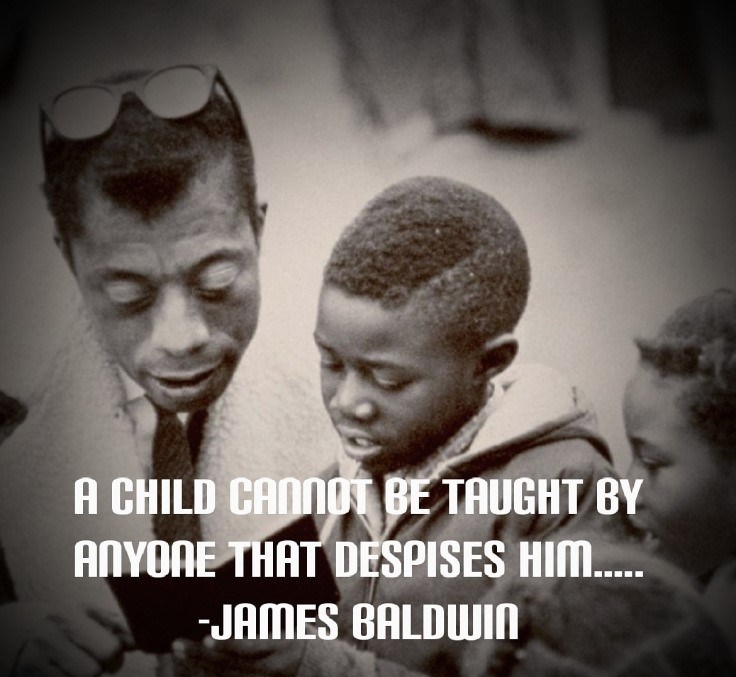
History, as nearly no one seems to know, is not merely something to be read. And it does not refer principally to the past. On the contrary, the great force of history comes from the fact that we carry it within us, that we are unconsciously controlled by it in many ways. History is literally present in everything we think and do. James Baldwin

This quote, by Black Civil Rights activist James Baldwin, resonated with me following our recent Provocations lecture.  A vast amount of information was provided and discussed during the session but to acknowledge our own history was resounding. This led me think about our habitus and hidden curriculum within the teaching profession and how our own history effects our philosophy.

Bourdieu (1986) discusses habitus and the conception that all human action connected the relationship between an individual’s thoughts and actions; habitus, and the overall objective world (Bourdieu and Passeron, 1990).  Habitus enables us to interpret experiences that we encounter in life, how to deal with specific situations or events and why we may feel awkward or uncomfortable in certain circumstances (Deerness, 2012).  Our own habitus and beliefs are formed through our life experiences, incorporating how we speak, dress, our manners and life’s expectations, thus enabling us to reflect on how we might incorporate them, either positively or negatively, into the hidden curriculum.  This is also our ‘history’, the history deep within each of us that is rooted in our upbringing, life experiences and our unconscious.

Philip Jackson (1968) identifies the hidden curriculum as the unwritten and unintended lessons that students learn at school, the “unpublicised features of school life” (Jackson, 1968, p.17).  The understanding is that students absorb the implicit messages of social and cultural behaviour that are communicated from teacher to classroom.  These messages can range from how to interact with peers and teachers, what ideas and behaviours are considered acceptable to how we perceive different races, groups, gender or social classes (Winter & Bailey, 2012).

I recall as a student, at secondary school in Northern Ireland, the hidden curriculum of my school was historically sexist.  The history of the past reflected on the present.  PE sessions were divided by gender, with girls playing hockey and boys playing football and rugby.  During the summer boys and girls combined to compete together in athletics.  At this time, the late 1980’s/early 1990’s, the school did not permit girls to compete in javelin as it was considered inappropriate.  I thought the rule was completely wrong and dismissed females as the weaker sex.  Another gender specific rule stated that girls only competed in sprint trials up to 800m, however the boys could run greater distances.  I maintain that these archaic rules were based on the traditional historical gender beliefs that girls are the weaker sex, compared to boys.

As aforementioned I was raised in Northern Ireland, a country with a violent past and segregated on the grounds of religion, Catholic and Protestant.  I went to a predominantly Protestant school in a low socio-economic area.  We were divided from the Catholic population at school, in our community, Church and practically every aspect of our lives.  The population of Northern Ireland in 1991 was almost significantly majority white, in fact 99.75% (Northern Ireland Statistics & Research Agency, 2015).  I therefore had little or no opportunity to be associated with other religions, races or social groups besides my own.  For some members of society this would result in an extremely fixed mindset towards people of other ethnicities and religion, however for me it was always a dream to travel and immerse myself in other cultures and communities.  Thus, I immigrated to New Zealand and settled in Auckland, the fourth most ethnically diverse country in the world (Statistics New Zealand, 2013).  It was living in an ethnically static country such as Northern Ireland that positively influenced me to want to live and work in an ethnically inclusive country, ensuring that everyone was treated equally and without prejudice.

Each of us, as teachers, have our own past experiences and life lessons learnt and each of us will bring this history and habitus to school, incorporating it into our own teaching philosophy.  However, we must ensure that these messages are positive and culturally responsive, inclusive and equitable; ensuring that students are nurtured and respected through our history and into their future.  It is imperative we, as future teachers, provide a safe learning environment in which students are positively influenced to attain personal achievements, regardless of gender, ethnicity, social class etc and where inclusive, participative, contextual teaching promotes inspired, engaged and co-operative learning.

References

Bourdieu, P. (1986).  “The forms of capital”.  In I. Szeman & T. Kaposy (eds.), Cultural theory – An anthology (pp. 81-90).  West Sussex, England: Wiley-Blackwell.

Bourdieu, P. & Passeron, J. C. (1990).  Reproduction in education, society and culture.  London, England: Sage Publications.

Deerness, S. (2012).  Just habitus: Why habitus matters in socially just teaching.  In M. Stephenson, I. Duhn, V. M. Carpenter, & Airini (eds.), Changing worlds, critical voices and new knowledge in education, pp.126-137.  Auckland, New Zealand: Pearson.

Jackson, P. W. (1968).  Life in classrooms.  New York, USA : Holt, Reinhart and Winston.

Northern Ireland Statistics & Research Agency.  (2015).  Census 1991 [Website].  Retrieved April 14, 2019, from NISRA website : http://www.nisra.gov.uk/census/previous-census-statistics/1991.html

Statistics New Zealand.  (2013).  Estimated resident population (ERP), sub national population by ethnic group, age, sex, at 30 June 2013.  Retrieved April 12, 2019, from Statistics New Zealand website: http://nzdotstat.stats.govt.nz/wbos/Index.aspx?DataSetCode=TABLECODE7512# ffff

Winter, J., & Bailey, I. (2012).  Researching the hidden curriculum: intentional and unintended messages.  Journal of Geography in Higher Education, 37(2), 192.  doi: 10/1080/03098265.2012.733684

Plato and Education

Educationists’ ideas can be grouped into three general ideas about the purpose of education. These are:

  • to socialise people.
  • to ensure that each individual develops to their full potential.
  • to ensure that people have certain important kinds of knowledge.

The modern meaning of education is derived from Socrates’ idea educere from the Latin ducere, meaning to lead or draw out (Turner, 1998).

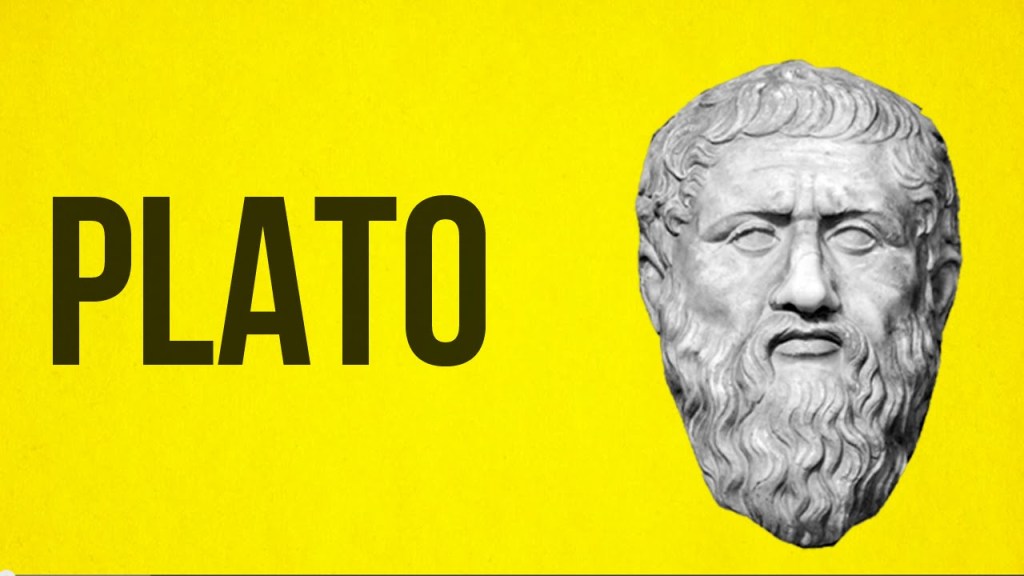
Plato sets out a model for a civil society that is hierarchical.  At the top of the classes are the guardians of society or philosopher kings.  He also describes a model for education that is designed to develop the abilities of the philosopher kings, although this became highly selective and took many years to progress through each stage.  The full benefits of this system were only available to the elite.  Could this also be the foundation for private schools?  To develop future ‘philosopher kings’ that would govern the Country and make laws that inevitably assist higher classes at the expense of the working class?

Plato’s education system was knowledge-centered, and the curriculum is developed from knowledge that is valued, not because it is useful, but because it develops the mind in a particular way.  The traditional ‘academic’ curriculum; quadratic equations, Shakespeare, Latin and Greek, classical history etc is based on this idea.

Plato’s education system was designed to produce a stable, secure and just society, in which everyone would know their place, and be happy.  Plato’s definition, however, lacks an important component of happiness – passion.  I believe true happiness involves the active and passionate pursuit of a goal.  Developing gratitude and a sense of subjective wellbeing is important in the attainment of happiness and the consequences including optimism and higher creativity.

There are five ways to develop happiness (Foresight, 2008):

  • give
  • take notice
  • be active
  • connect
  • keep learning

Thus, the inclusion of inquiry-based learning, on a foundation of a topic that interests a student, is imperative to the success of education in schools today.  It is also interesting to note that keeping learning and taking notice (of the world around them) are two important concepts to happiness.

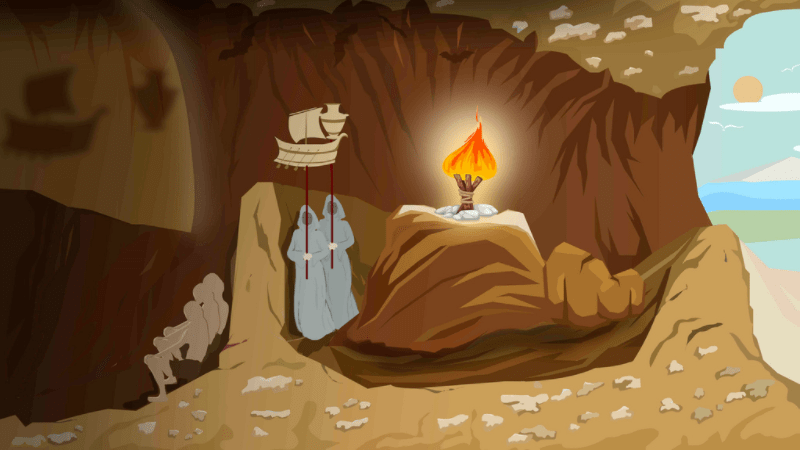
Plato also used the allegory of the cave as a metaphor for the human condition believing that people who do not examine their lives (or take notice) were doomed to live like prisoners in a cave.  The prisoners are shackled to the ground and can only see shadows, which are created by artificial light and manipulated by unseen overlords.  The prisoners do not have a true concept of their existence and therefore do not possess knowledge to try to change it or a desire to be free.  Only by leaving the cave can the prisoners learn true knowledge and existence, deciphering what is real and what is untrue.

I believe this can be a metaphor for not only life but also education.  Only by developing an enquiring mind can we leave our daily routine of looking at the shadows and enter a world filled with light and life.  We as teachers should be presenting students paths on how to inquire into the world around us, to be free from the shackles of the past and emerge as critical thinkers, knowledge seekers and with a developing thirst for lifelong learning.

Click to view short video outlining Allegory of the Cave

References:

Foresight Mental Capital and Wellbeing Project (2008).  The Government Office for Science, London.  Retrieved March 17, 2019 from https://assets.publishing.service.gov.uk/government/uploads/system/uploads/attachment_data/file/292450/mental-capital-wellbeing-report.pdf

Turner, J. (1998).  Turns of phrase and routes to learning.  The journey metaphor in educational culture.  Intercultural Communication Studies, 7, 23-36. olorful Accent