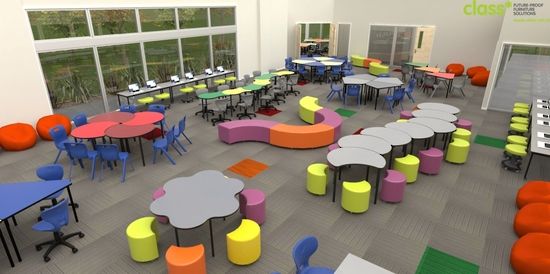
A recent lecture discussed education within the ‘Modern Learning Environment’, sometimes known as flexible learning environments. These types of schools may be new to Aotearoa New Zealand, but they have existed in the United Kingdom since 1921, when Summerhill School was first established. Summerhill was set up under the belief that the school should fit the child and not the other way around. Enid Blyton’s The Naughtiest Girl series of novels, written in the 1940s and 50s, were set in a school based on Summerhill, with democratic meetings allowing the children to make decisions about the school and ‘punishments’. In the 1970’s working class freedom schools were established in London and Liverpool and enabled pupils to choose their subjects for the day, teachers were ‘workers’ and called by their first name, there were no bells and no timetables. These examples are all reminiscent of todays ‘modern learning environments’.
In analysing modern learning environments, positively they create a relaxed learning environment and students are treated like young adults instead of ‘school children’. The schools can be successful for self-motivated students and utilise versatile environments, breaking down cross curricular barriers. However, modern learning environments do not work for everyone. Creating open learning classes where two different subject areas are sharing the same space can become a distraction for students. Without proper management, some students will get left behind in their education and suffer, both emotionally and educationally, through a lack of routine and/or boundaries.
As part of my undergraduate degree I spent 4 weeks at a modern learning primary school in Auckland. The purpose was to investigate how the school included of Treaty of Waitangi Principles in Education, so much of my time was spent observing classes from Years 2-6. During this time, I noticed that many children did not complete the work they had chosen, instead they played in the book corner, played games on devices, talked and some were very disruptive. In the combined Year 3 classroom there were approximately 65 students, 2 teachers and a teacher aide. When the teachers facilitated small ‘work groups’ of approximately 6-8 students, the remainder of the class chose their own work to complete. I recall sitting at a maths table and watched as some students wrote sums on the white board, no one checked they had answered correctly, the students just erased their answers and went to the next topic. I spoke to a few of the students and tried to correct their maths (Year 3 is probably about my level of maths!), however they said that is how they always worked and off they went to play in the corner! Educational anarchy in action.
For me, the experience left a negative view of modern learning environments. I understand how it may work for some self-motivated and disciplined students and perhaps work more effectively within a secondary school environment, but I did not see many benefits at a primary level.
Modern learning it may be called, however, the practice is far from modern nor without problems.
References:

 MyProvocations