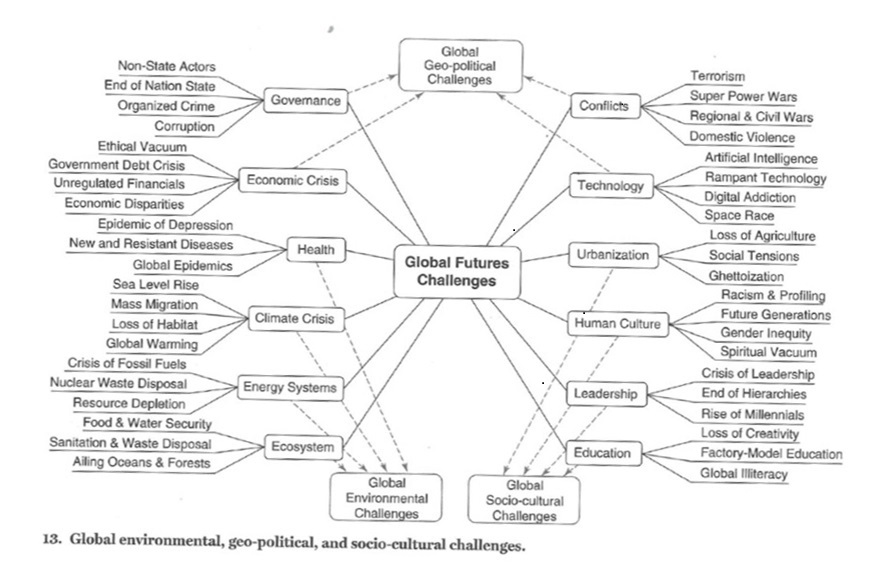
A recent lecture on future focused education led me to think about the need for education to change and be more inclusive of future focused ideas. I came across a diagram showing Global Future Challenges, as stated by Gibley (2017), and noted her inclusion of Education : Factory-Model Education and Global Illiteracy. It is considering Factory-Model Education that the song by Pink Floyd came to mind, ‘Another brick in the wall!’.
Pink Floyd – Another brick in the wall: https://binged.it/2WBQOUJ
Pink Floyd used their fame and status to talk about rigid schooling and factory model education in 1979. It is quite amazing to me that we are still talking about this today, 40 years later. School has been devised around the same established practice; groups of about 30 students, approximately the same age, taught by one teacher in a single classroom. The factory-model classroom was established to adequately prepare youth for the industrialized economy.
Since the first schools were established, things have slightly changed, and schools moved to adopt new technologies and progress into the modern era, with the introduction of computers and software. However, there is little research-based evidence that these tools have had the impact on public education that many anticipated. Given the enormous impact that technology has had on nearly every other aspect of our society, how can that be? The introduction of technology into our classrooms has tried to change the way in which we work but the school structure is practically unchanged since the mid-nineteenth century. Can we try to change one aspect of education but not any other?
The factory model of schooling came from a belief that education was a way create a tolerant, civilized society, one in which rules were followed. The factory assembly line was the most efficient way to scale production with each worker knowing what they should do and when to do it. The factory-model classroom was therefore established to rapidly scale up a system of schools. Historically, factories weren’t designed to support personalisation and neither were schools.
Today our vision for education is broader, we are more complex and diverse, and our technical capabilities are more powerful. However, we continue to assume the factory-model classroom and its rigid bell schedules, credit requirements, age-based grade levels, and physical specifications when we talk about school reform. Will we still be talking about reform in another 40 years?
One school to tackle education reform head on is Ao Tawhiti school in Christchurch. With no playground, no gym, no bells and students decide their own start times …. is it the answer to an age-old problem? Personally, it would not suit me as a teacher nor would I send my children there, and the low NCEA results are worrying but I can see how it would work for some students and whanau.
Read more about the school here: https://www.stuff.co.nz/national/education/112584590/unique-school-opens-in-christchurchs-central-city-with-550-pupils?cid=facebook.post&fbclid=IwAR2AjDVMIg-i_afBAkW_rkjL4Q_091seUq_0wrbGf1h0aIhAl1LomCbF-pw
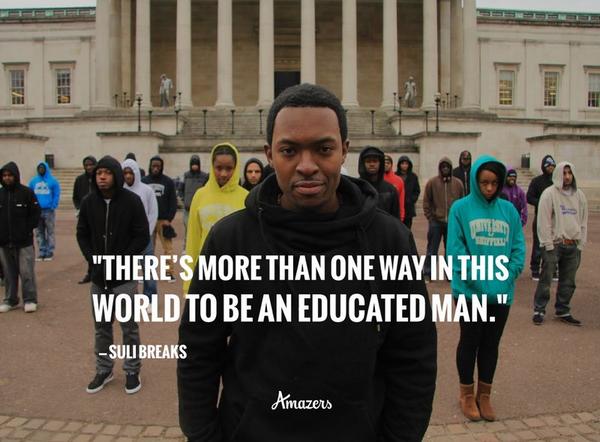
The following video from Suli Breaks, a UK social media influencer and poet, discusses his dislike of school but love of education. 6 minutes to provoke your own views.
Suli Breaks : https://binged.it/2WDECme
We as teachers must participate in the discourse of future focused education. Wider research into futures education needs to be conducted and we must be a part of this, ensuring that both teachers and students are better prepared for the future.
References:
Gidley, J. (2017). The future : a very short introduction. Oxford University Press. Retrieved from http://search.ebscohost.com.ezproxy.aut.ac.nz/login.aspx?direct=true&db=cat05020a&AN=aut.b23999354&site=eds-live en1 \lsdunhi

 MyProvocations